
EMOTIONAL INTENSITY: Understanding the "Hydrant vs. Faucet" Metaphor
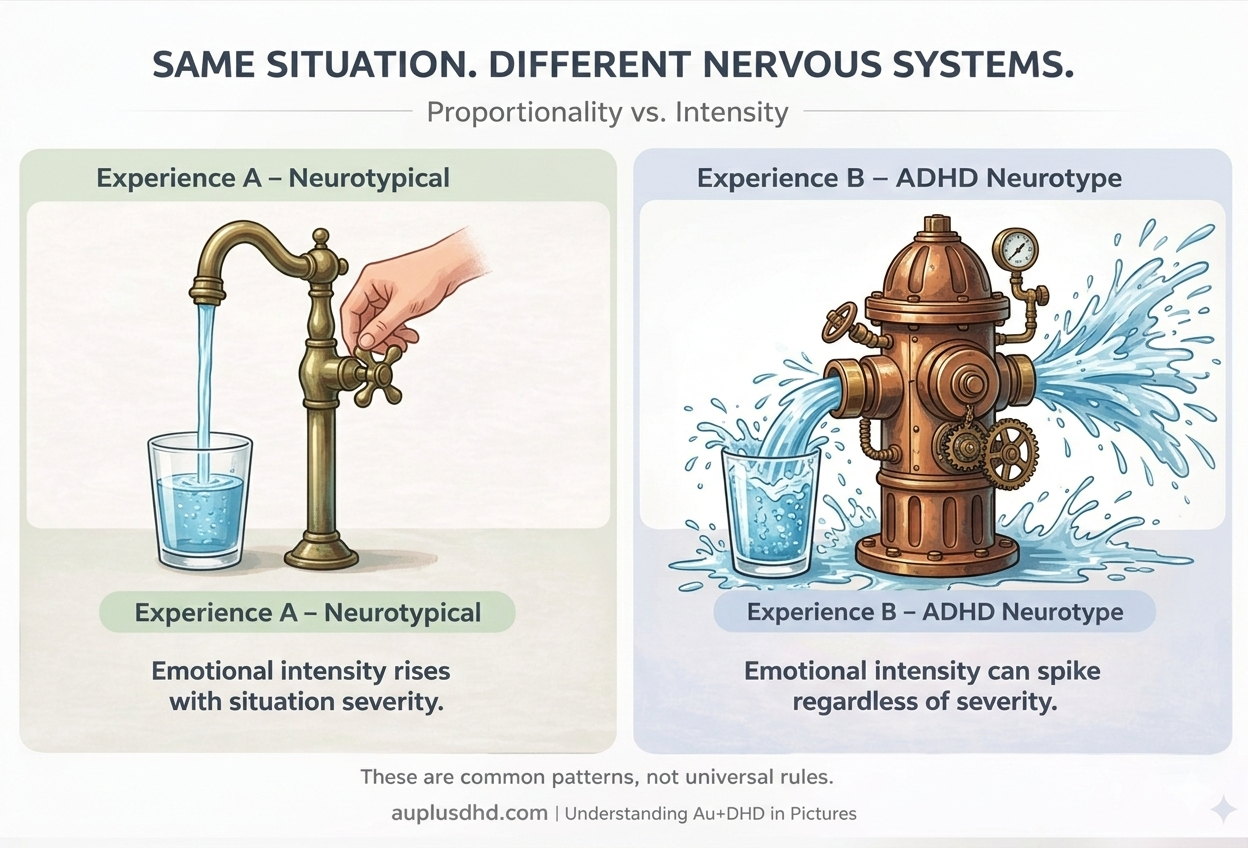
This image explores how different nervous systems experience emotional intensity, using a simple water metaphor to illustrate that what looks like "overreacting" is often just a different internal design.
What Is Emotional Dysregulation? A Clinical Definition
Emotional dysregulation refers to difficulty managing the intensity or duration of emotional responses. It is characterized by:
Emotional reactions that may seem disproportionate to the trigger
Difficulty calming down once upset
A low tolerance for frustration or disappointment
Heightened sensitivity to perceived criticism or rejection
In clinical settings, this is often framed as a deficit—an inability to control or moderate one's emotions. But what if we looked at it differently?
The Paradigm Shift: From Broken System to Different Inner Experience
The clinical view often asks: "Why is this person overreacting?" But a neurodivergent-affirming view asks: "What is their inner experience actually like?"
The difference is not about having too much emotion. It's about having a nervous system that experiences emotion with a different level of intensity, all the time. The goal isn't to turn down the volume on feelings—it's to understand that the volume knob is set differently from the start.
Experience A: The Neurotypical Nervous System
The Faucet: Emotional intensity rises with the situation.
For many neurotypical individuals, emotional intensity operates like a faucet. The water pressure increases gradually and proportionally to how far you turn the handle.
How It Works: A small trigger = a small emotional response. A major event = a larger emotional response. The intensity is generally proportional to the severity of the situation.
The Experience: Emotions feel manageable, predictable, and connected to what's happening in the external world.
Experience B: The ADHD/AuDHD Nervous System
The Fire Hydrant: Emotional intensity can spike regardless of severity.
For many ADHD and AuDHD individuals, the nervous system operates more like a fire hydrant. The pressure is always on. When an emotion is triggered—whether by something massive or something seemingly minor—it doesn't trickle out. It bursts.
How It Works: The emotional response is not always proportional to the trigger. A small inconvenience can unleash the same intensity as a major loss. The hydrant doesn't know the difference between a small leak and a five-alarm fire; it just releases at full pressure.
The Experience: Emotions are felt viscerally, immediately, and overwhelmingly. There is no "dial"; there is only "on."
Same Situation. Different Nervous Systems.
Trigger | Neurotypical Faucet | ADHD/AuDHD Fire Hydrant |
|---|---|---|
Being interrupted | Mild annoyance | Sudden surge of frustration or anger |
A change of plans | Slight disappointment | Intense distress, feeling unmoored |
A critical comment | Brief hurt feelings | Overwhelming shame or RSD (Rejection Sensitive Dysphoria) |
A happy surprise | Pleasant warmth | Burst of joy, tears, uncontrollable excitement |
Key Takeaways: Reframing the Experience
It's not an overreaction; it's a different pressure system. The fire hydrant isn't broken because it releases water at high pressure. That's how it was designed. The same is true for the ADHD nervous system.
The intensity is real. Telling someone to "calm down" or "not overreact" invalidates their genuine inner experience. For them, the emotion is that big.
Healing is not about turning down the pressure. It's about learning to work with the pressure that's there—building spaciousness, creating safe outlets, and surrounding oneself with people who understand that the hydrant flows differently.
These are common patterns, not universal rules. Every nervous system is unique, and understanding begins with curiosity, not judgment.
